
29. 10. 2026
How do you remove pet hair from a carpet?
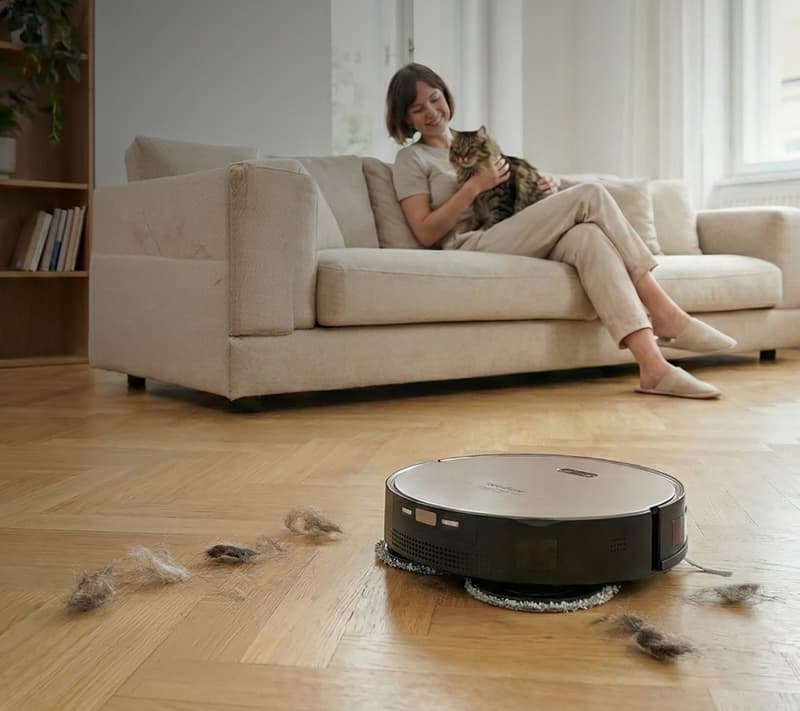
Pets bring a lot of joy into our lives, but they also present one major cleaning challenge: pet hair everywhere you look. And carpets, in particular, act as a perfect magnet for pet hair and dust. A dog or cat can turn a clean carpet into a hair-filled mess in just a few days, especially during shedding season. The hair gets caught between the fibers, gradually gets trampled into the carpet, and becomes increasingly difficult to remove. A robotic vacuum designed for pet hair can clean the carpet regularly and significantly reduce the amount of fur before it has a chance to accumulate in your home.
Why does pet hair stick to carpets so much?
On a smooth floor, most hair remains loose on the surface, and the robot can simply suck it up or sweep it toward the suction opening. Carpets are more complicated. If you feel like pet hair clings to the carpet with a death grip, you’re not far from the truth. Physics is to blame—more specifically, static electricity and the structure of the hair itself. Pet hair is covered with microscopic scales that easily get lodged in the carpet’s weave. Furthermore, pet hair tends to give up electrons, while the synthetic fibers in most modern carpets strongly attract them. The result is an electrostatic attraction that causes the hairs to cling more firmly to the carpet fibers, and the vacuum cleaner’s suction alone may not always be enough to dislodge them.
Individual hairs then get caught between the carpet fibers, penetrate deeper into the pile, clump together into tiny tufts, or get tangled in the vacuum cleaner’s rotating brush.
How do you remove dog or cat hair from a carpet?
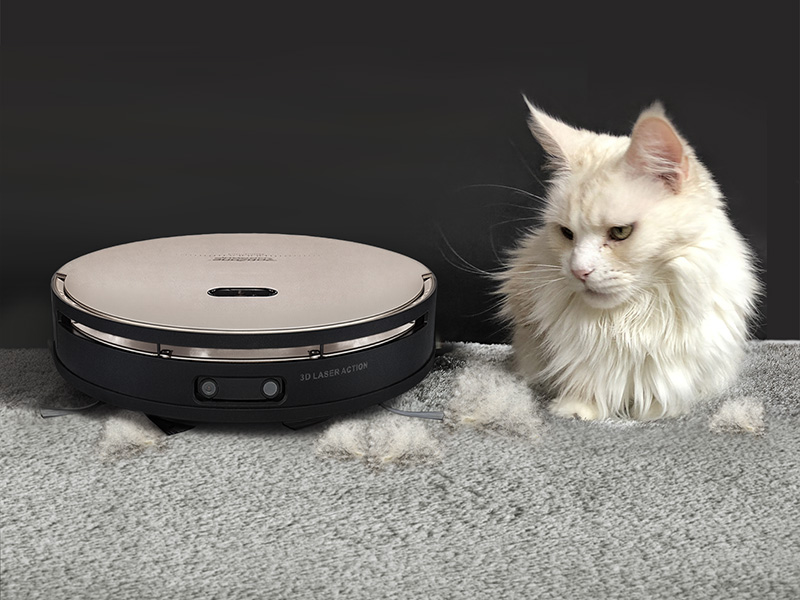
The most effective approach is not to wait until the carpet is visibly covered with hair. In a household with a pet, regular cleaning works much better.
1. Vacuum the carpet regularly
The longer the hair stays in the carpet, the more it gets trapped between the fibers and spreads throughout the home. You can set your robot vacuum to clean every day or several times a week, depending on how much your pet sheds. This way, the robot doesn’t have to deal with a thick layer of pet hair every time, since it continuously removes whatever has accumulated on the floor and carpet since the last cleaning.
2. Choose the Right Vacuum Head for Your Carpet
For a deeper clean of your carpet, it’s important that the brush be able to loosen dirt and pet hair from the carpet fibers so that the vacuum’s suction system can then remove them.
For example, the Roomy Expert Profi uses the Airmax Carpet Pro head with a rotating lamella-bristle brush that reaches even deeply embedded dirt.
With models that have interchangeable heads, you can tailor the cleaning to the type of floor. For example, the Duoro X-Max system uses the Easy Pet head—which lacks a rotating brush—for smooth floors, pet hair, and long human hair, while the Airmax head with a rotating brush is designed for more thorough carpet cleaning.
3. Increase the cleaning frequency during shedding season
If you have a hairier breed at home that sheds heavily, you’ll quickly notice the difference between vacuuming once a week and daily robotic cleaning. You can even schedule vacuuming several times a day, so not a single unwanted hair remains on the floor. A robotic vacuum doesn’t just save you time by cleaning for you. The main advantage is that it prevents hair from accumulating in your home.
For heavily soiled carpets, a more thorough cleaning or manual removal of deeply embedded pet hair may be necessary from time to time; however, during normal use, regular vacuuming with a robotic vacuum designed for pet hair reduces the amount of fur, effectively eliminating this problem.
What is the best robotic vacuum cleaner for pet hair?
The type of flooring is the most important factor.
- Are carpets the dominant flooring type in your home? In such households, high-quality suction and a brush system designed for textile surfaces are most important.
- Do you have a mix of carpets and hard floors? In homes where a dog or cat moves between carpet, vinyl, tile, or hardwood floors, greater versatility is needed. For example, the Roomy Supra Homevac vacuums both carpets and hard floors, features a brush head suitable for pet hair and human hair, and comes with an automatic docking station. This means you don’t have to manually empty the collected hair from the robot’s dustbin after every cleaning session.
- Want to vacuum and mop at the same time? Choose a robot vacuum with a mop designed for dog hair. For example, the Duoro X-Max Homevac combines vacuuming, electronically controlled Aquamax mopping, and automatic debris removal. The system includes various types of suction heads, so you can customize the cleaning for hard floors, pet hair, and carpets.
If you have a mix of carpets and hard floors, the Duoro X-Comfort models are also worth considering; they can detect carpets and automatically lift the mops when passing over them.
What should you look for when choosing a vacuum cleaner for pet hair?
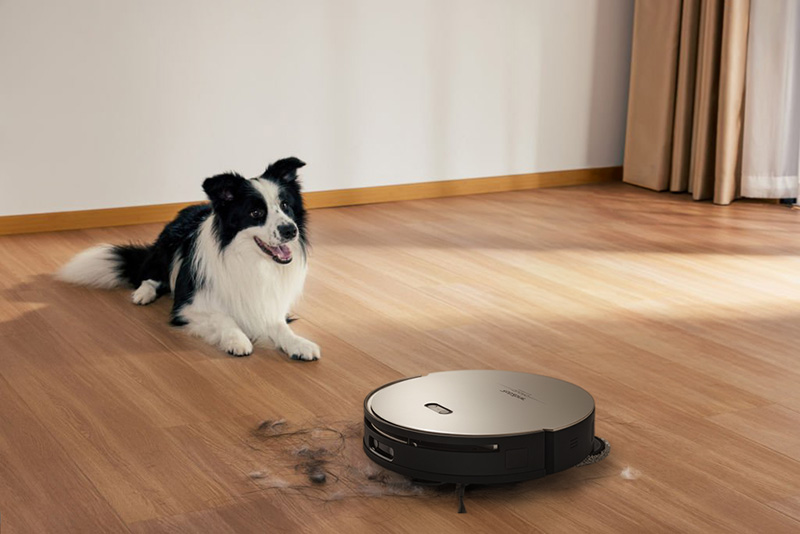
If you’re looking for a robot vacuum for pet hair, don’t just look at a single number indicating suction power. In a household with a dog or cat, other parameters are just as important.
- Suction head: For smooth floors, a design that prevents pet hair and long human hair from getting tangled is ideal. On carpets, however, a brush that can loosen fur from the fibers is essential.
- Performance on carpets: The robot should be able to remove debris from between the fibers, not just pick up hair lying on the surface.
- Automatic power boost: A feature like “Carpet Boost” can automatically increase suction power when it detects carpet. Some RobZone Duoro models, for example, have this feature.
- Navigation and cleaning schedule: In a household with a pet, it’s helpful to be able to set a regular cleaning schedule for specific rooms or zones.
- Automatic Docking Station: The more your pet sheds, the faster the dustbin fills up. A docking station that automatically empties debris from the robot can therefore significantly reduce the amount of daily maintenance required.
Read our guide to choosing a robot vacuum and learn about all the important factors for selecting the ideal helper.
Don’t forget about pet hair on smooth floors
Even if carpets are your biggest concern, clumps of pet hair usually get trapped under furniture, in corners, or around pet beds, and as the robot moves around the room, they can end up back on the carpet. This is where robotic vacuums come in handy—they can handle both hard floors and carpets and systematically clean your entire home. This combination is often more practical than tackling each surface separately.
Look for robots with a hot mopping feature, which will remove not only dry dirt but also dried paw prints. A cleaning product with an odor absorber is also a great helper; it neutralizes odors not only from pets but also from cooking or smoke.
A Cleaner Home, Even with a Four-Legged Friend
Don’t wait until the fur is visible on the carpet at first glance. Regular cleaning works best, with the robot removing hair continuously before it has a chance to get deep between the fibers. A properly chosen robotic vacuum cleaner designed for pet hair doesn’t just mean less hair on the floor—most importantly, it saves you the trouble of pulling out a traditional vacuum cleaner every day and helps keep your home consistently clean.